Robotic Scan2BIM
Robots, LiDAR, and AI converging into a single pipeline that turns physical buildings into intelligent digital models - the infrastructure layer for smarter cities.
Three technologies. One conversion pipeline
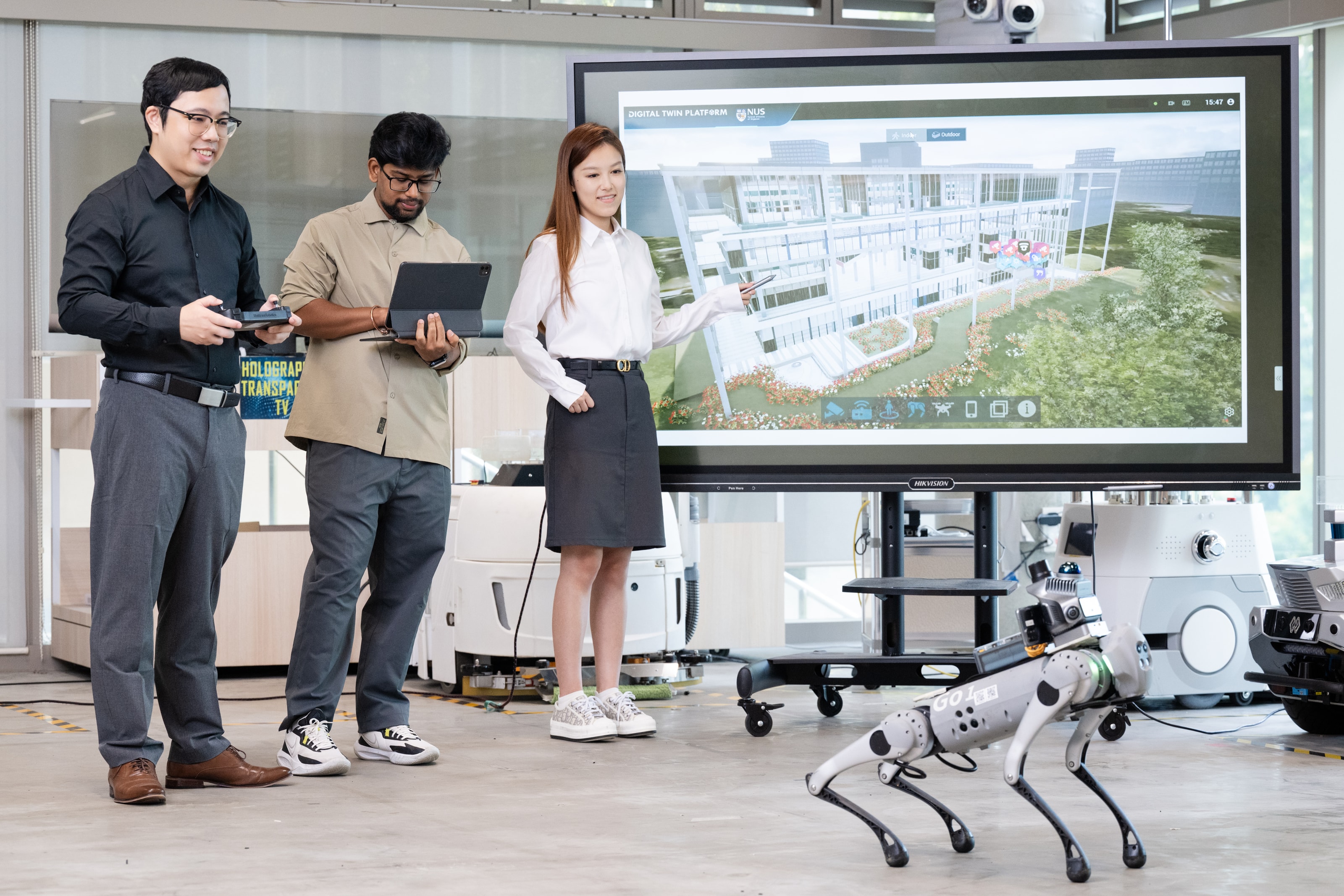
At the College of Design and Engineering, innovation often emerges from the convergence of multiple disciplines. Leading one such effort is Dr Vincent Gan, whose lab focuses on Robotics and AI-Assisted Digital Building Modelling - an area that integrates robotics, artificial intelligence, and advanced digital modelling to transform how buildings and infrastructure are documented, analysed, and managed.
The lab’s research centres on three interrelated areas: robotic 3D scanning, Scan-to-BIM, and computational design. Together, these technologies aim to automate the process of capturing real-world environments and converting them into intelligent digital models that can support engineering analysis, design optimisation, and infrastructure management.
Seed grants → national funders
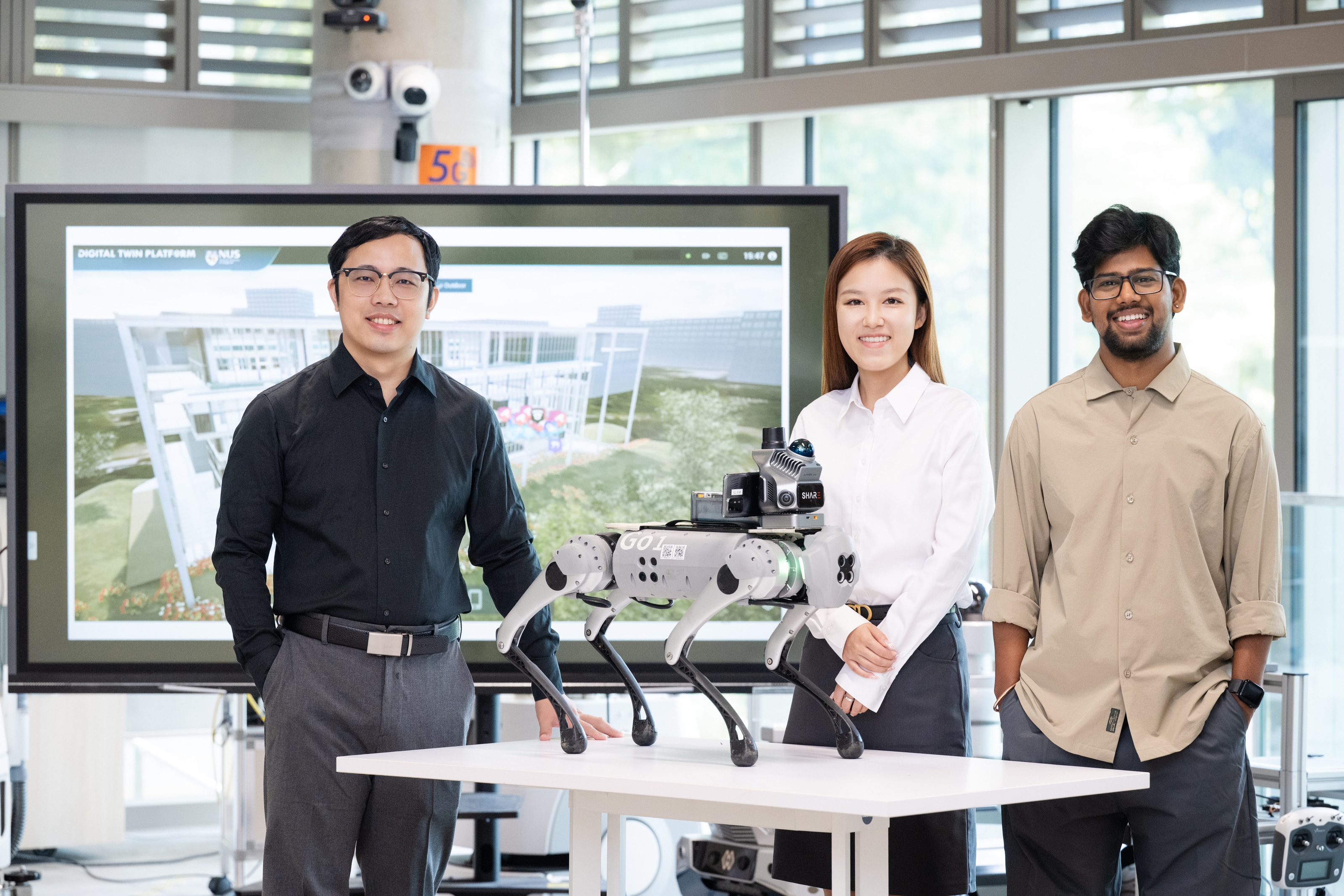
Early support from CDE played a pivotal role in enabling this research journey. Through seed funding and co-matching support for programmes such as DeGap, along with several internal grants, Prof Gan and his team initiated foundational work in LiDAR mapping, AI algorithms, and advanced building information modelling (BIM).
These early efforts helped attract larger external funding from agencies including AI Singapore, Land Transport Authority, and Public Utilities Board.
With this support, the team developed autonomous mobile robotic scanning systems and AI pipelines capable of transforming reality-capture data into semantically enriched BIM models. These enhanced digital models allow engineers and planners to better understand existing structures and optimise infrastructure systems - bridging the gap between physical environments and their digital representations.
Interdisciplinary by design
Within the College, Prof Gan’s team collaborates with colleagues from Civil Engineering, Electrical and Computer Engineering, and Geography at the Faculty of Arts and Social Sciences. These partnerships enable the exploration of next-generation robotic AI solutions, including social navigation for workplace robots and geospatial intelligence for mapping complex environments.
Participation in CDE Innovation Day further accelerated the initiative’s momentum. The event created opportunities for the team to engage with government agencies and industry stakeholders interested in automated 3D scanning and Scan-to-BIM technologies - discussions that helped validate the practical relevance of the research and encouraged the team to explore pathways towards commercialisation.
From research to commercial pilots
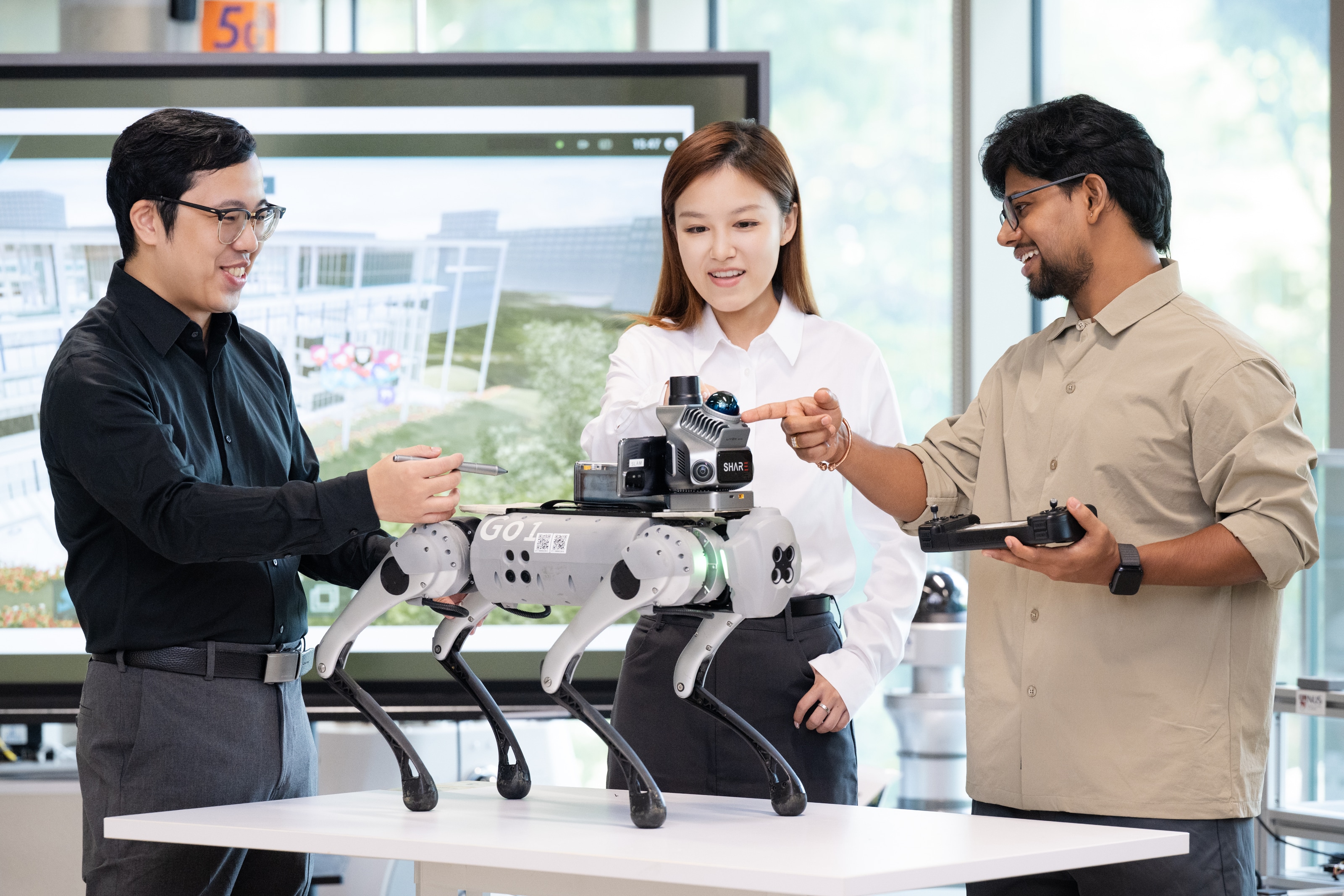
Following the showcase, the researchers began exploring collaborations to expand their automated scanning and modelling technologies into applications such as smart building management and infrastructure monitoring. The team has also signed a research collaboration agreement with Aruvii, a CDE spin-off from Electrical and Computer Engineering, to explore potential market opportunities and industry applications.
Today, the technology is being tested across several application domains, including the digitalisation of existing buildings and infrastructure scanning. The team is also working closely with the NUS Technology Transfer and Innovation office to discuss licensing strategies, potential start-up formation, and approaches to engaging industry customers.
Looking ahead, Prof Gan and his team plan to refine the technology through pilot testing with existing collaborators while identifying practical use cases that demonstrate its value in real-world environments. In parallel, they are exploring opportunities to establish a start-up that will bring robotic Scan-to-BIM solutions to the market.
Dr Vincent Gan, NUS CDE
Dr Vincent Gan is an Assistant Professor in the College of Design and Engineering at NUS. His research focuses on how robotics and artificial intelligence enhance reality capture, advanced 3D modelling, and computational design optimisation of buildings and structural systems.
His recent work seeks to develop ground robot–based LiDAR mapping and image-based sensing methods to capture high-quality geometric data in complex, semi-structured environments. Building on this foundation, his team explores representation learning and semantic enrichment approaches to transform raw scan data into structured, content-rich building information models (Scan-to-BIM), supporting as-built modelling, digital twins, and data-driven design optimisation of buildings and infrastructure.
His work has recently expanded into areas such as robot social navigation and geospatial intelligence. In parallel, he is actively pursuing the translation of the robotic Scan-to-BIM solution.